Aluminum Water Bottle Mockup: A Practical Evaluation
In the competitive landscape of product design and branding, visual representation is often the first point of contact between a concept and a consumer. For businesses creating custom hydration gear, the Aluminum Water Bottle Mockup has become an essential tool in the pre-production workflow. These digital templates allow designers to visualize how logos, typography, and graphics will appear on a finished metal surface without the immediate need for physical manufacturing. This article explores the utility, benefits, and limitations of using these mockups, specifically focusing on realistic brushed aluminum and insulated sport bottle variations.
Understanding the Aluminum Water Bottle Mockup
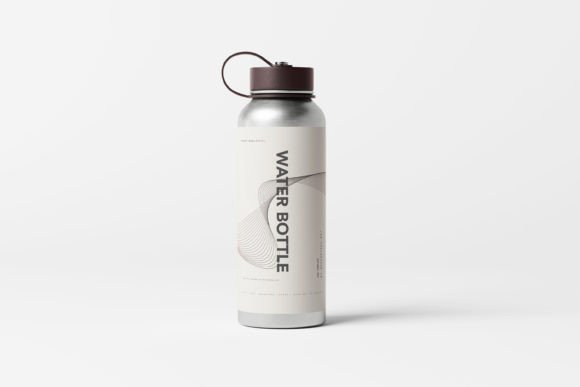
An Aluminum Water Bottle Mockup is a high-resolution digital file that simulates the appearance of a physical water bottle. Unlike a simple flat image, these templates are typically created using 3D rendering software to capture the nuances of light, texture, and curvature inherent to metal surfaces. The specific variant known as the "Brushed aluminum insulated water bottle mockup" goes a step further by replicating the subtle grain of brushed metal and the thermal insulation layers common in modern sport bottles.
These files function as editable overlays. Designers import their artwork into the template, and the software automatically applies perspective, lighting, and shadow effects to make the design appear as if it is physically printed or etched onto the bottle. The result is a photorealistic image that can be used for marketing materials, client presentations, or internal reviews. Because they are digital assets, they offer a level of flexibility that physical prototypes cannot match, allowing for instant adjustments to colors, text, and graphic placement.
Why Consider a Digital Mockup?
The primary reason professionals turn to an Aluminum Water Bottle Mockup is the need for rapid visualization. In the early stages of product development, stakeholders often struggle to imagine how a two-dimensional logo translates to a three-dimensional cylindrical object with reflective properties. A mockup bridges this gap immediately.
Furthermore, the cost implications are significant. Creating a physical prototype involves mold creation, material sourcing, and printing processes, which can be expensive and time-consuming. By utilizing a high-quality template, brands can iterate through dozens of design concepts at a fraction of the cost. This is particularly relevant for companies producing limited edition runs or seasonal merchandise where testing multiple designs before committing to a bulk order is a standard risk management strategy.
Additionally, the aesthetic quality of modern templates has improved drastically. The inclusion of realistic details, such as the condensation on a cold drink container or the specific sheen of brushed aluminum, ensures that the final presentation looks professional. This realism is crucial when presenting to clients who may not have a technical background but need to approve a design based on its visual appeal.
Benefits and Strategic Advantages
When evaluating whether to incorporate an Aluminum Water Bottle Mockup into your workflow, several distinct advantages emerge:
- Speed and Efficiency: Changes that would take days to manufacture can be made in minutes. If a client requests a different shade of blue or a repositioned logo, the designer simply adjusts the layer in the editing software.
- Cost Reduction: Eliminating the need for initial physical samples saves money on materials and shipping. This allows budget allocation to be shifted toward higher-value activities like market research or advertising.
- Brand Consistency: Templates often come with guides that ensure the design adheres to brand guidelines regarding spacing, color accuracy, and legibility on curved surfaces.
- Marketing Readiness: High-resolution renders can be used immediately in social media campaigns, e-commerce listings, and pitch decks while the actual product is still in production.
For the specific case of the Brushed aluminum insulated water bottle mockup, the benefit lies in the accurate depiction of texture. Brushed metal interacts with light differently than polished or matte finishes. A good template captures this interaction, preventing the common pitfall of a design looking "flat" or unrealistic against a metallic background.
Tradeoffs and Limitations
While the advantages are clear, it is important to maintain a balanced view of what these tools can and cannot do. The most significant tradeoff is the lack of tactile feedback. A digital render cannot convey the weight of the bottle, the smoothness of the cap mechanism, or the exact feel of the grip. For products where ergonomics and physical durability are paramount, a mockup is insufficient as a standalone validation tool.
Another consideration is the potential for visual deception. Even the most realistic 3D render may not perfectly predict how ink sits on aluminum during the actual printing process. Factors like substrate absorption, curing temperatures, and the specific type of coating applied to the bottle can alter the final look. Therefore, relying solely on a mockup for final color approval carries some risk. It serves as a strong indicator, but not a guarantee of the physical outcome.
Furthermore, there is a learning curve associated with using these templates effectively. While many are marketed as user-friendly, achieving a truly seamless integration of custom graphics requires proficiency in software like Adobe Photoshop or Illustrator. Users unfamiliar with masking, blending modes, and layer styles may produce results that look artificial or poorly aligned.
When Is a Mockup the Right Choice?
An Aluminum Water Bottle Mockup is an ideal solution in several specific scenarios:
- Client Presentations: When pitching a new line of branded merchandise to a corporate client, visual proof is necessary to secure approval. A mockup provides this without the delay of manufacturing.
- E-Commerce Launches: Online stores often list products before inventory arrives. Using high-quality renders allows sellers to generate traffic and pre-orders immediately.
- Design Iteration: During the creative phase, teams need to test various layouts quickly. A mockup facilitates rapid A/B testing of different design elements.
- Budget-Constrained Projects: For startups or small businesses with limited capital, avoiding the upfront cost of prototyping is a strategic necessity.
If your goal is to validate the visual impact of a logo on a sporty, insulated bottle, this tool aligns perfectly with those objectives. It provides the necessary visual fidelity to make informed decisions about aesthetics and branding.
When to Consider Alternatives
Despite its utility, there are situations where alternatives to a digital mockup are more appropriate. If the project involves complex structural changes to the bottle itself—such as altering the shape of the cap or the thickness of the wall—a standard mockup will not suffice. In these cases, 3D modeling software capable of modifying the geometry of the object is required.
Similarly, if the final product relies heavily on specialized finishing techniques that are difficult to simulate digitally, such as holographic foils, embossing, or textured powder coatings, a physical sample is indispensable. No amount of digital manipulation can fully replicate the way light refracts off a raised embossed logo or the depth of a spot UV coating.
Finally, for quality control purposes, a mockup should never replace a physical proof. Before mass production, a single unit must be manufactured to verify color accuracy, print adhesion, and overall build quality. The mockup is a planning tool, not a quality assurance tool.
Decision-Making Insights
To determine if an Aluminum Water Bottle Mockup fits your needs, consider the stage of your project and your primary objective. If you are in the conceptualization or sales phase, the speed and cost-efficiency of a mockup make it a superior choice. It allows you to communicate your vision clearly and professionally without incurring unnecessary expenses.
However, if you are in the final validation phase or dealing with highly specialized materials, supplement the digital render with physical samples. The most effective workflow often combines both: use the Brushed aluminum insulated water bottle mockup to refine the design and secure stakeholder buy-in, then transition to physical prototyping for final verification.
By understanding the capabilities and constraints of these templates, designers and business owners can leverage them to streamline their production cycles. They offer a practical bridge between imagination and reality, ensuring that the final product meets both aesthetic expectations and functional requirements.