Cartoon Forest Background with Pond, Swamp, and Trail: A Practical Asset Review
In the landscape of digital design, the demand for high-quality, versatile vector illustrations remains consistent. Professionals ranging from children's book illustrators to marketing agencies frequently seek assets that balance whimsy with structural clarity. The Cartoon Forest Background with Pond, Swamp, and Trail represents a specific category of nature-themed vector art designed to serve as a foundational element in various creative projects. Unlike photorealistic imagery, which can be rigid and difficult to integrate with stylized graphics, this type of illustration offers a cohesive aesthetic that simplifies the composition process while maintaining visual interest.
This asset is not merely a decorative image; it is a functional tool for designers who need to establish setting quickly without sacrificing quality. By combining elements like a pond or swamp, a winding trail, and dense foliage, the illustration provides a complete scene ready for customization. For professionals managing tight deadlines or working within specific brand guidelines that require a softer, more approachable look, understanding the utility and limitations of such resources is essential for efficient workflow management.
Defining the Visual Components and Structure
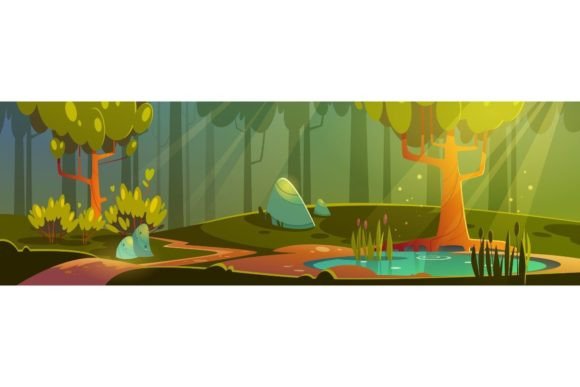
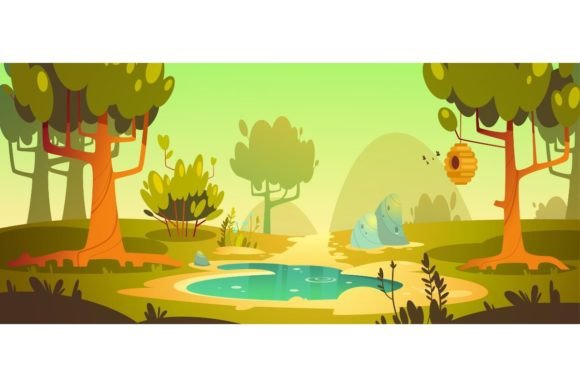
The core value of the Cartoon Forest Background with Pond, Swamp, and Trail lies in its composition. It typically features a layered arrangement where the foreground includes detailed bushes and grass, the mid-ground presents the water feature (either a clear pond or a murky swamp), and the background consists of towering trees and a sky. This depth creates a sense of scale and perspective that is often missing in flat design elements.
The inclusion of a trail is particularly significant. In design theory, leading lines guide the viewer's eye through an image. A winding path through the woods naturally draws attention toward the center or a specific focal point, making it an excellent choice for placing characters, text, or call-to-action buttons. Whether the water body is depicted as a serene summer pond or a mysterious swamp alters the mood significantly, allowing the same base file to serve different narrative purposes. The use of vector formats ensures that these elements remain crisp at any resolution, a critical factor for print media and large-format displays.
Technical Specifications and File Utility
From a technical standpoint, the availability of both vector EPS files and raster JPG images addresses diverse workflow needs. The EPS file is the primary asset for professional applications. Because vectors are mathematically defined rather than pixel-based, they offer infinite scalability. Designers can resize the forest, stretch the trail, or isolate individual trees without any loss of quality. This flexibility is indispensable when adapting a single concept for multiple platforms, from a mobile app icon to a billboard.
Furthermore, the layered nature of vector files allows for granular editing. A designer might need to change the color of the grass to match a brand palette or remove a specific bush to make room for a logo. With an EPS file, these modifications are straightforward. The accompanying JPG serves as a quick preview or a placeholder for web projects where vector support is limited, ensuring that stakeholders can visualize the final product immediately without needing specialized software to open the source file.
Color Consistency and Seasonal Adaptability
One of the strengths of this specific illustration style is its adaptability regarding seasonal themes. While the default palette often suggests spring or summer with vibrant greens and blues, the clean lines and solid fills typical of cartoon vector art make color replacement efficient. A marketer could easily shift the hue of the leaves to orange and brown for an autumn campaign or add white overlays for a winter theme. This versatility extends the lifespan of the asset, transforming a single purchase into a long-term resource for various seasonal content calendars.
Real-World Applications and Industry Use Cases
The practical application of a Cartoon Forest Background with Pond, Swamp, and Trail spans several industries. In the publishing sector, it is a staple for children's books, educational materials, and storybooks. The friendly, non-threatening nature of cartoon forests makes them ideal for introducing young readers to concepts of nature, wildlife, and exploration. Educators also utilize these backgrounds for interactive slides, worksheets, and classroom decorations, providing a visually engaging environment that keeps students focused.
For entrepreneurs and small business owners, particularly those in the eco-friendly, outdoor recreation, or wellness sectors, this asset offers a way to communicate values without the high cost of custom photography. A local hiking club, for instance, could use the trail element to promote an upcoming event, overlaying details about the route on top of the illustrated path. Similarly, a daycare center or a family-oriented event planner might use the pond and swamp elements to create invitations or promotional flyers that feel inviting and safe.
Digital marketers and bloggers often face the challenge of creating unique visuals for articles about nature, travel, or lifestyle. Stock photography can sometimes feel generic or carry licensing restrictions that limit usage. A well-crafted vector illustration like this one solves that problem by offering a distinct style that stands out against the sea of realistic photos found on most blogs. It allows for better integration with typography and other graphic elements, resulting in a more polished and professional presentation.
Evaluating Quality and Workflow Integration
When assessing the quality of such assets, the focus should be on line work, color harmony, and logical composition. High-quality cartoon forests avoid muddy colors and inconsistent line weights. The transition between the water, land, and sky should be smooth, and the vegetation should appear organic rather than repetitive. If the trees look like exact clones pasted repeatedly, the asset loses its realism even within a stylized context. A well-executed Cartoon Forest Background with Pond, Swamp, and Trail will feature varied tree shapes, differing bush sizes, and natural irregularities that mimic real growth patterns.
Usability is another critical metric. The file structure should be organized, with layers clearly named and grouped logically. This reduces the time spent untangling complex files during the editing phase. For freelancers and agencies billing by the hour, efficiency directly impacts profitability. An asset that requires extensive cleanup before it can be used diminishes its value. Conversely, a clean, well-structured vector file accelerates the production timeline, allowing creatives to focus on higher-level design decisions rather than technical troubleshooting.
Potential Limitations and Considerations
Despite its advantages, this type of asset is not a universal solution. The cartoon style may not align with brands that prioritize a serious, corporate, or hyper-realistic image. Using a whimsical forest background for a financial report or a medical publication would likely create a tonal disconnect. Additionally, while the asset provides a beautiful scenery view, it lacks the specific detail of location-specific flora. If a project requires accurate representation of a particular biome, such as a redwood forest or a tropical rainforest, a generic cartoon illustration may fall short.
Designers must also consider the complexity of the background when adding text. Dense foliage and intricate patterns can interfere with readability. It is often necessary to apply opacity masks, gradients, or solid color blocks over parts of the illustration to ensure that headlines and body copy remain legible. Understanding these constraints beforehand helps in planning the layout effectively.
Strategic Value for Creators and Businesses
Ultimately, the decision to incorporate a Cartoon Forest Background with Pond, Swamp, and Trail into a project depends on the alignment between the asset's capabilities and the project's goals. For those seeking a reliable, scalable, and aesthetically pleasing foundation for their designs, this resource offers significant value. It bridges the gap between generic stock imagery and expensive custom illustration, providing a middle ground that is both cost-effective and professionally viable.
By leveraging the included EPS and JPG formats, creators can maintain consistency across print and digital channels. The ability to customize colors, rearrange elements, and adapt the scene for different narratives ensures that the asset remains relevant over time. For professionals aged 20–50 who manage diverse portfolios, having a library of such flexible assets is a strategic advantage. It empowers them to deliver high-quality results efficiently, meeting client expectations while maintaining creative control.
Whether you are designing a cover for a new children's novel, creating a landing page for an outdoor adventure company, or developing educational content for a school district, the right background sets the stage for success. The Cartoon Forest Background with Pond, Swamp, and Trail provides that stage with a blend of charm and functionality that is hard to replicate. As with any creative tool, its effectiveness relies on how skillfully it is integrated into the broader design strategy, but its potential to enhance visual storytelling is undeniable.