Brushed Traditional Korean Hanok Home: A Design Guide for Authenticity and Quality
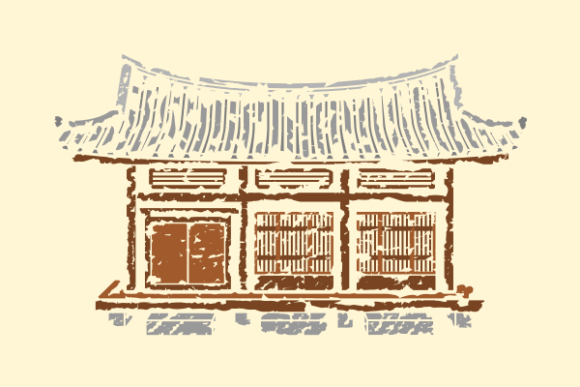
There is a distinct elegance in the architecture of Korea that has captivated designers, historians, and cultural enthusiasts for generations. The Brushed Traditional Korean Hanok Home illustration captures this essence perfectly, blending historical accuracy with an artistic style that feels both timeless and modern. Whether you are creating a marketing campaign for a heritage site, designing a book cover about Asian history, or building a website for a traditional tea house, having access to high-quality vector assets is crucial. However, simply downloading a file labeled "Hanok" does not guarantee a professional result. Many creators overlook critical details regarding file formats, editing capabilities, and stylistic consistency, leading to designs that feel generic or technically flawed.
Understanding the Value of Brushed Style Illustrations
The appeal of a Brushed Traditional Korean Hanok Home lies in its ability to convey texture and movement without sacrificing clarity. Unlike flat, solid-color icons, brushed stroke illustrations mimic the look of ink wash painting or watercolor, adding a layer of human touch to digital designs. This style is particularly effective when discussing oriental history and culture because it respects the medium traditionally used by Korean artists. It suggests craftsmanship and depth, making your project stand out in a sea of sterile, computer-generated graphics.
For professionals and hobbyists alike, the versatility of these assets is their greatest strength. You can scale them from a tiny favicon to a massive billboard without losing quality, provided you have the correct source files. The inclusion of editable SVG vectors means you are not locked into a single color palette or composition. You can adjust the roof curvature, change the ink density, or integrate the structure into complex layouts while maintaining crisp edges. This flexibility is essential for entrepreneurs and marketers who need to adapt their branding across various platforms efficiently.
Common Pitfalls When Selecting Vector Assets
Despite the clear benefits, many users make avoidable mistakes when sourcing and utilizing these illustrations. One of the most frequent errors is prioritizing visual appearance over file integrity. A beautiful image on a preview thumbnail might be a rasterized PNG with low resolution, which will pixelate immediately upon scaling. Always verify that you are receiving a true vector file, such as an SVG or EPS, rather than just a high-resolution image. If you cannot edit the individual strokes or shapes, the asset limits your creative potential significantly.
Another common misunderstanding involves the software compatibility of these files. While many graphic design tools claim to support vector formats, not all handle complex brush strokes equally well. Some users attempt to open advanced SVG files in basic editors only to find that the strokes have been flattened or converted into uneditable paths. This can ruin the intended aesthetic of the Brushed Traditional Korean Hanok Home, turning fluid lines into jagged polygons. It is vital to understand the specific requirements of the file before integrating it into your workflow.
The Importance of Choosing the Right Editing Tool
To fully leverage the potential of these illustrations, selecting the appropriate software is non-negotiable. For those working with open-source solutions or seeking a robust tool specifically designed for scalable vector graphics, Inkscape is often the superior choice. Unlike some proprietary software that may struggle with certain path data or brush definitions, Inkscape handles SVG standards with precision. It allows you to manipulate the stroke width, pressure sensitivity simulation, and node points of the Hanok structure without degrading the image quality.
If you are a freelancer or small business owner looking to minimize costs without sacrificing quality, relying on Inkscape ensures you can customize the asset extensively. You can separate the layers of the front view, adjust the color of the wooden pillars to match your brand guidelines, or even add new elements like cherry blossoms or snow effects using the same brush engine. Attempting these edits in a program not optimized for vector manipulation can lead to frustration, wasted time, and a final product that lacks the smoothness required for professional presentation.
Evaluating File Formats and Deliverables
When purchasing or downloading a resource pack, the variety of included formats speaks volumes about the creator's professionalism. A comprehensive package should include more than just one file type. Ideally, you should receive an SVG for web use and easy editing, an EPS for print production, a PDF for universal viewing and archiving, and a high-resolution PNG for quick previews or social media posts where vector editing isn't necessary.
A significant mistake many beginners make is ignoring the ZIP archive contents until after they have started a project. By then, they may discover they lack the PDF version needed for a client presentation or the EPS file required by a printing press. Always unzip the folder first and inspect the file list. Ensure that the resolution of the PNG is sufficient for your largest intended output—usually 300 DPI or higher. If the package is missing these standard industry formats, consider whether the asset is truly worth your investment.
Practical Steps for Successful Integration
To ensure your design project succeeds, follow a structured approach when applying the Brushed Traditional Korean Hanok Home illustration. Start by importing the SVG file directly into your preferred vector editor, such as Inkscape. Before making any changes, save a master copy of the original file. This preserves the untouched source material in case you need to revert changes or experiment with different variations later.
- Check Layer Structure: Open the file and examine the layers panel. A well-organized file will have separate layers for the roof, walls, doors, and decorative elements. This makes it easy to hide or modify specific parts of the house without affecting the whole.
- Test Stroke Consistency: Zoom in to 400% or higher to inspect the brush strokes. They should appear smooth and continuous. If you see jagged edges or broken lines, the file may have been improperly exported or optimized.
- Verify Color Profiles: Ensure the colors are set to the correct mode for your output. Use CMYK for print projects and RGB for digital displays. Converting between modes too late in the process can shift the warm tones of the wood and the cool grays of the tiles, altering the mood of the illustration.
Consider the context in which the Hanok will appear. If you are using it for a logo, simplify the details slightly to ensure legibility at small sizes. For a large banner or poster, you can afford to keep all the intricate textures and brush marks. The goal is to balance authenticity with functionality. A design that looks perfect on a screen but fails in print is a missed opportunity, regardless of how beautiful the initial concept was.
Final Considerations for Creators
Choosing the right visual assets is a decision that impacts the credibility and aesthetic appeal of your entire project. The Brushed Traditional Korean Hanok Home offers a unique blend of cultural significance and artistic flair, but only if handled correctly. By avoiding the trap of low-quality files, selecting the right editing software like Inkscape, and thoroughly checking your deliverables, you ensure that your work stands out for the right reasons.
Remember that the best design choices are often the ones made with foresight. Take the time to evaluate the technical specifications of your resources before committing to them. Whether you are an educator illustrating a lesson on Korean history or a marketer launching a new cultural tourism campaign, the quality of your visuals communicates respect for the subject matter. With the right tools and attention to detail, you can create compelling designs that honor tradition while embracing modern digital possibilities.